Emergency Plumber in Medford, NY: What to Do Before Help Arrives (Step-by-Step Guide)
Your Immediate Action Plan to Limit Damage
When a toilet is overflowing, a pipe bursts, or sewage starts coming up through a drain, you don’t have time to scroll through articles trying to figure out what to do.
You need two things immediately:
- A reliable emergency plumber in Medford, NY, and
- A clear checklist for what to do before they arrive.
RotorPro Cesspool, Drain Cleaning & Plumbing Service provides 24/7 emergency plumbing for homeowners and businesses in Medford, Farmingville, and the surrounding Suffolk County area. But even with a great plumber on the way, what you do in the next 10–20 minutes can make a huge difference.
This guide walks you through:
- What really counts as a plumbing emergency
- Step-by-step actions to take before your plumber gets there
- What to expect when RotorPro’s emergency team arrives
Why a Local Emergency Plumber in Medford, Ny Matters
In an emergency, distance and familiarity are huge.
A truly local emergency plumber:
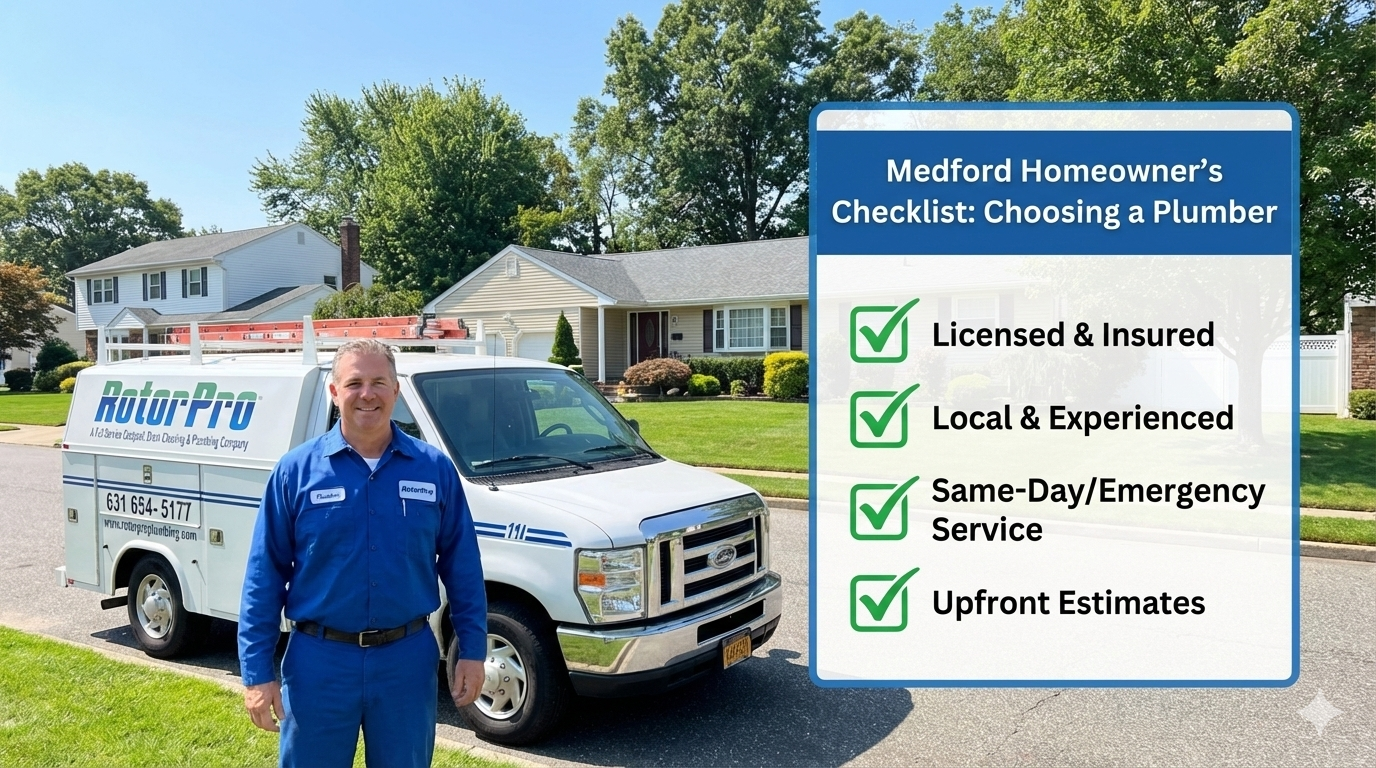
- Knows Medford’s housing stock, older plumbing, and common failure points
- Understands cesspool and septic issues common on Long Island
- Can offer same-day and after-hours service, not “we’ll get you on the schedule next week”
- Has a reputation to protect with nearby homeowners and businesses
RotorPro is based right in Medford, NY, with another location in Mount Sinai, and focuses on residential, commercial, and industrial plumbing, plus drain cleaning and pumping. That local setup means when something goes wrong, you’re not waiting on a truck coming from the other side of the island.
What Counts as a Plumbing Emergency?
Not every drip is an emergency—but some problems can quickly cause major damage or health risks.
Treat it as an emergency if you see any of this:
- Burst or actively leaking pipes
Water is spraying, streaming, or soaking ceilings, walls, or floors. - Sewage backup
Wastewater coming up through tubs, toilets, floor drains, or showers, often with strong odors. - Overflowing toilets that won’t stop
Especially when you only have one bathroom working. - No water or extremely low pressure
A sudden loss of water to the entire home or building can indicate a serious issue. - No hot water plus other warning signs
Leaking around the heater, banging noises, burning smells, or tripped breakers. - Basement or crawl space flooding
Standing water that’s spreading quickly—possibly from broken pipes or a septic/cesspool issue.
If you’re unsure, call an emergency plumber in Medford, NY and describe what’s happening. They can usually tell you over the phone whether you need immediate help or can safely wait for standard hours.
Step-by-step: What to Do Before the Emergency Plumber Arrives
Once you’ve called RotorPro (or another emergency plumber), follow this checklist to stay safe and reduce damage.
Step 1: Stay calm and think safety first
Take a breath. Panic leads to rushed, unsafe decisions.
Focus on:
- Keeping kids and pets away from affected areas
- Watching for slipping hazards on wet floors
- Avoiding contact with any water that looks dirty or smells like sewage
- Staying away from outlets, cords, or appliances in standing water
If you suspect an electrical hazard (sparks, buzzing, burning smell):
Don’t step into water that could be energized
If you can safely reach it, shut off power to the affected room(s) at the breaker panel
Then wait for professionals; don’t take risks.
Step 2: Shut off the water (fixture first, then main)
Stopping the flow of water is the fastest way to limit damage.
- Try the fixture shutoff valve
- Toilet: turn the small valve behind or beside the toilet clockwise.
- Sink: turn the hot and cold shutoff valves under the sink clockwise.
- If that isn’t enough, turn off the main water supply
- Often found in the basement, utility room, or where the main line enters the house.
- Turn the main valve clockwise until it stops.
Yes, it’s inconvenient to be without water—but it’s far better than watching a ceiling collapse or flooring buckle.
Step 3: Stop using nearby fixtures and appliances
Even if only one area is acting up, plumbing is interconnected.
Until the plumber arrives:
- Don’t flush toilets on the same line
- Pause dishwashers, washing machines, and long showers
- Avoid running sinks near the affected area
If you’re dealing with a sewer or septic backup, any extra water you send down the drains can push more waste into your home. Hold off until the emergency plumber has assessed and cleared the lines.
Step 4: Protect your belongings and contain the water
Once you’ve slowed or stopped the flow, shift into damage control:
- Move valuables
Rugs, boxes, electronics, cardboard, and low furniture should be moved out of harm’s way. - Soak and block
Use old towels, sheets, or blankets to absorb water and keep it from spreading into other rooms. - Catch drips
If water is dripping from the ceiling, place a bucket under the drip. If the ceiling is bulging with trapped water and you can safely reach it, a small controlled hole (with a bucket underneath) can relieve pressure and prevent a larger collapse. - Ventilate if possible
Open windows and doors in mild weather to reduce humidity and help things dry out faster.
You’re not trying to “fix” the problem—that’s your plumber’s job. Your goal is to stop the bleeding.
Step 5: Treat sewage and gray water as hazardous
If the emergency involves:
- A backed-up toilet
- Sewage in the tub or shower
- Dirty water rising from floor drains
Treat that water as contaminated:
- Keep kids and pets away
- Avoid splashing it or tracking it through the house
- Use gloves and boots if you have to be near it
- Don’t start deep cleaning yet—just focus on containing it
Emergency plumbers like RotorPro also deal with septic and cesspool issues, so they can help safely remove and manage contaminated water once they arrive.
Step 6: Relieve pressure where appropriate
If it’s safe and your plumber (or dispatcher) recommends it:
- Open a faucet at the lowest level of the home
This can help relieve pressure in the lines and drain residual water after you shut off the main.
Don’t experiment if you’re unsure. When you call the office, describe the situation and ask if this step makes sense for your specific emergency.
Step 7: Document the damage
It feels like the last thing you want to do in the moment, but it really helps later.
Take photos and short videos of:
- The source of the problem (if visible)
- Standing water or affected areas
- Any damaged belongings or structural damage
Write a quick note on:
- When you first noticed the issue
- What changed right before it (storm, new appliance, recent work)
- What you did (shut offs, moved items, etc.)
This information helps both your plumber and your insurance company.
Step 8: Clear access for the plumber
Make it easy for the
emergency plumber to get right to work:
- Clear a path from the door to the affected area
- Move obstacles and clutter away from access points (under sinks, around water heaters, near cleanouts)
- Unlock any gates, basement doors, or utility rooms
- Secure nervous pets in another room
The less time they spend navigating obstacles, the more time they can spend diagnosing and fixing the issue.
Step 9: Make a quick list of other symptoms
While you’re waiting, think about:
- Other drains that have been slow or gurgling
- Any strange noises you’ve heard from pipes or the water heater
- Changes in water pressure or temperature over the last few weeks
- Any previous repairs or known issues with your plumbing or septic/cesspool
Share this when the tech arrives. It helps them see the whole system, not just the symptom that finally triggered the emergency call.
When to Call Immediately vs Wait for Normal Hours
Sometimes you’re not sure if it’s a “right now” problem or if it can wait until morning.
Call an emergency plumber right away if:
- Water or sewage is actively spreading and you can’t fully stop it
- There’s a risk of major damage (walls, ceilings, electrical)
- Your only bathroom is unusable
- A business or restaurant can’t open or operate safely
- You suspect a serious water heater, gas, or boiler issue (after calling the gas/electric company if needed)
You might wait for regular hours if:
- A small leak stops completely when you close a shutoff valve
- You have other working bathrooms or sinks
- The issue is annoying but stable (e.g., a slightly slow drain with no backups)
If you’re on the fence, call RotorPro, explain the situation, and ask whether it’s considered an emergency. They can help you decide the safest and most cost-effective option.
What to Expect When an Emergency Plumber From RotorPro Arrives
When you call RotorPro for emergency plumbing in Medford, here’s a typical flow:
- Rapid dispatch
A tech is dispatched out of Medford/Mount Sinai as soon as possible, based on current call volume and your location. - Safety check and assessment
They’ll confirm water is shut off where needed, check for electrical or structural risks, and assess how far the problem has spread. - Diagnosis with professional tools
Depending on the issue, they may use augers, cameras, pumps, or other specialty tools to find the true cause—broken line, severe clog, septic backup, etc. - Clear explanation and options
You’ll get a plain-English explanation of:
- What’s wrong
- What needs to be done right now to stabilize it
- Any follow-up work that may be needed after the emergency is resolved
- An upfront estimate before the work begins
- Emergency repair and stabilization
The priority is to stop the immediate damage: repairing or isolating leaks, clearing critical clogs, pumping if needed, and getting your home or business usable again. - Prevention recommendations
After things are under control, they’ll often recommend ongoing maintenance or upgrades—like regular drain cleaning, septic/cesspool pumping, or a preventative plumbing agreement—so you’re less likely to face the same emergency again.
How to Reduce the Chance of Future Plumbing Emergencies
Once you’ve lived through one plumbing disaster, you’ll do almost anything to avoid another. Some smart habits:
- Schedule periodic drain cleaning
Especially if you’ve had recurring clogs, tree roots, or older cast iron lines. - Stay on top of septic/cesspool pumping
Don’t wait for a backup. Follow a pumping schedule based on household size and usage. - Fix “little” things early
Drips, occasional clogs, and weird noises are often early warning signs. - Ask about maintenance programs
A preventative plumbing or drain maintenance plan can be cheaper than a single big emergency.
Need an Emergency Plumber in Medford, Ny Right Now?
If you’re dealing with a plumbing emergency in Medford, Farmingville, Patchogue, Yaphank, or anywhere nearby:
- Shut off the water and follow the steps in this guide.
- Call RotorPro, your local emergency plumber, at (631) 802-5157
- Stay safe, protect what you can, and let the pros handle the rest.
Plumbing emergencies are stressful—but with the right emergency plumber in Medford, NY and a clear plan for what to do before help arrives, you can turn a potential disaster into a problem that’s handled quickly and correctly.
How Fast Can an Emergency Plumber Get to My Home in Medford, Ny?
It depends on call volume and your exact location, but because RotorPro is based in Medford and also operates out of Mount Sinai, we can usually respond much faster than a company coming from far outside Suffolk County. When you call, we’ll give you a realistic time window.
Does Rotorpro Handle Both Residential and Commercial Emergencies?
Yes. RotorPro services homes, commercial buildings, and industrial facilities. Whether it’s a flooded basement in a house or a sewer backup in a restaurant, we can respond with the appropriate equipment and crew.
What Kinds of Emergencies Does Rotorpro Handle?
Common emergency calls include:
- Burst or leaking pipes
- Overflowing or severely clogged toilets
- Backed-up drains and sewer lines
- Basement or crawl space flooding
- Septic/cesspool backups
- Water heater failures causing leaks or no hot water
If water or waste is somewhere it should never be, we’re equipped to help.
How Much Does an Emergency Plumber in Medford, NY Cost?
Pricing depends on the type of problem, how severe it is, and how long it takes to fix. Emergency service typically costs more than a standard scheduled visit, but RotorPro focuses on clear, upfront estimates—so you’ll understand the cost before work starts. Calling early can sometimes prevent a small issue from becoming a much more expensive disaster.
Do I Need to Be Home When the Emergency Plumber Arrives?
Yes. Someone should be on-site to let the technician in, explain what happened, and approve the work. If you can, shut off the water, contain the damage as best as possible, then be ready to walk the tech through what you’ve seen when they arrive.
Related Articles